

Agentic coding in AEC: Turning Knowledge into Practical Tools


.svg)
.svg)

.svg)
.svg)
For engineering and design firms, we seek consistency. Consistency in calculations, drawings, specifications, and reports – essentially everything we touch. The work needs to be repeatable, reviewable, and accurate.
In their rawest forms, AI large language models (LLMs) are anything but repeatable. They are nondeterministic systems that will produce varying output that is influenced by training data, model settings, reinforcement learning, system prompts, context, compute, and actual randomness.
Even with the most powerful state-of-the-art models like ChatGPT 5.5 Thinking or Claude Opus 4.7 (as of this writing) they will sometimes make surprisingly basic mistakes. Both in logic and in how they read information.
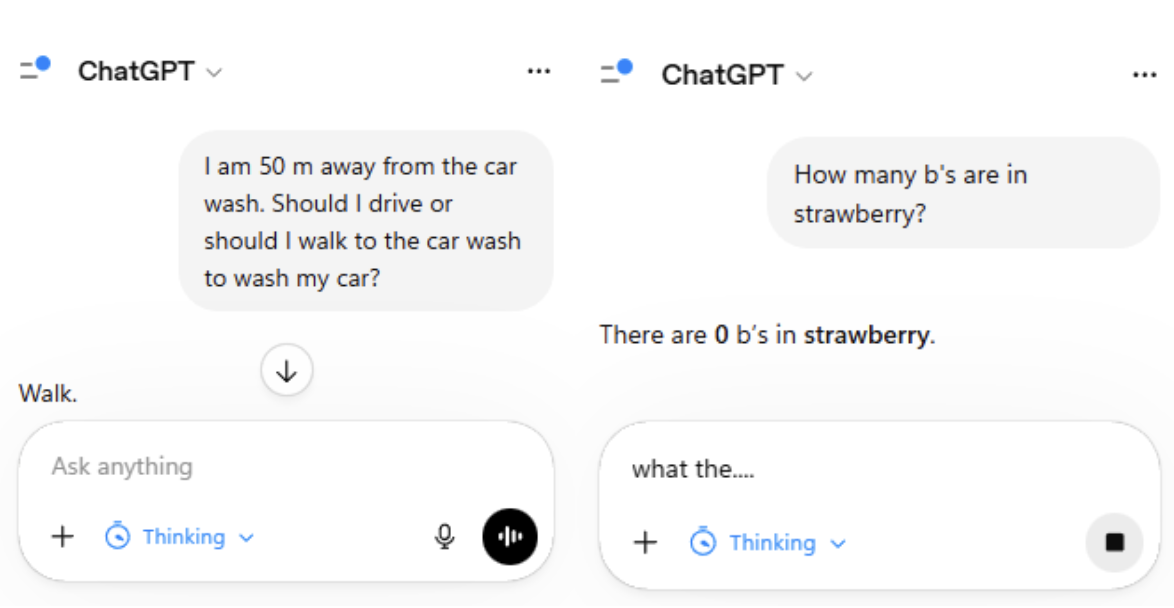
To be clear: these models are astonishingly knowledgeable compared to any single human you have ever met. They are approaching the frontier of human knowledge in all sciences, simultaneously. Once you have used them for any amount of time, you will naturally develop a level of trust in the output. The mistakes in the above examples are obvious, but what about when they are not?
The models still do not have the capability to regularly respond “I don’t know” when the training data is limited and the answer is unknown. This can lead to hallucinations and confidently incorrect output.
In practice, there are two very different ways AEC firms can use these models responsibly.
The first is as a research and exploration tool. Source material matters: codes, standards, papers, and reputable documentation. When you have this information on hand, give it to the model for context. When you do not have this information, ask the model where its source material is coming from. In all cases, review the output with source material to form your own conclusions. The models are incredible tools to help you drill into source material rapidly, but always form your own conclusions based on sources – not the model’s output.
Tip: Google’s “Notebook LM” is a great AI tool for drilling into large PDF documents and referencing the source materials directly. Think of it as an advanced “search” function. At SMP, we use it to surface information from building codes, electrical codes, and tertiary codes such as fire alarm, elevator, and healthcare standards.
The second, and the main point of this article, is as a software development accelerator. Coding tasks that previously required significant software development experience, and weeks to months of time, can now be prototyped by subject-matter experts in minutes to days. With agentic coding platforms such as Codex, Cursor, and Claude Code - it is possible for most firms to create their own in-house software tools. Somewhat ironically, we are using nondeterministic AI models to develop software that follows strict formulas, templates, standards, inputs, validation rules, and outputs – to make our processes more repeatable, reviewable, and accurate than ever before.
The goal is not to use AI tools as an uncontrollable black box. It’s to build controlled tools and workflows that can be tested, reviewed, and improved over time.
What is agentic coding?
A year ago, AI coding tools could do work like make edits, write functions, create small utilities, and find errors. “Vibe coding” involved generating and copying swaths of code that usually did not follow a specific direction, structure, or best practices for software development. It could work, but often not well.
In 2026, agentic coding hits different.
What changed? Models and harnesses. A harness is a software tool that connects the models to a computer to do work. Codex, Cursor, and Claude Code are examples of harnesses that enable the models (like GPT 5.5) to work through a complete implementation loop with access to all required development tools. The harness enables the model to run terminal commands, inspect the code, develop plans and goals, create and edit multiple files, and test their own work: iteratively updating until there is a working result. This autonomous workflow is what makes the AI an agent. The model, harness, and human work together to perform agentic coding.
Anyone from senior software developers to kids can use agentic coding tools to make useful software. At SMP, we have subject-matter experts developing tools for tasks that make us more efficient, while providing the repeatable, reviewable, and accurate results we require.
What kind of tools are possible?
At SMP, we are developing tools to improve workflow in many aspects of the company from marketing through to electrical engineering. The goal is not to make software simply because we can, the goal is to analyze areas of our work that are repetitive, time consuming, error prone, or difficult to standardize and build tools around that work.
In AEC, these types of opportunities are everywhere:
- Calculation and design support tools
- CAD and BIM automation
- Project setup and document generation
- QA/QC and review tools
- File, knowledge, and business development tools
Examples of internal tools at SMP:
- RFP Scanner: automated scanning of online sources for new project RFPs relevant to SMP in our area
- Project Automation Tool: automated document creation (docx, xlsx, pdf) based on project information and source templates
- Project File Manager: quickly find any project across all company drives, add projects files and folders from template structure, move files between project drives and SharePoint for external sharing
- Revit Tools: perform calculations and validation checks on electrical circuits and elements, automated component placement, and various drafting tasks
- AutoCAD Tools: perform tasks including batch layer manipulation and block updates
- Various Excel macro-enabled workbooks that perform calculations and validation checks based on reference codes, best practices, and SMP standards
- Outlook addins to improve email focus and responsiveness
- ETAP automation to perform comprehensive batch data manipulation of electrical models
The tools still require discipline
It is now relatively easy to make these tools. Subject matter experts and professionals must be involved at every step. Internal tools need assumptions clearly documented, test cases, version control, ownership and extensive review. They must be rolled out carefully. Calculated results must be appropriately validated by a professional. The role of the professional does not change.
Agentic coding can give AEC firms a practical means to turn internal knowledge, standards, workflows, and lessons learned into streamlined software that improves consistency and reduces repetitive effort. Used properly, agentic coding is not about trusting AI more. It is simply about making our own processes more repeatable, reviewable, and accurate.
How to get started?
Start small. Think of one repetitive workflow that is well understood, and simply ask a model of your choice: “How do I get started with agentic coding?”
Happy coding!
Editor's note: This article was written in April 2026. The AI landscape moves quickly, the models named above (such as Claude Opus 4.7 and GPT-5.5 Thinking) are point-in-time examples and have since been succeeded by newer releases. The principles and approach still apply.

Practice-based insights from across our team









Calgary, AB T2N 3P7
Edmonton, AB T5N 3K3
Lethbridge, AB T1J 4M1
Vancouver, BC V5Z 4C2
.svg)
.svg)
.svg)