

Upgrading the Upgrade: Helping Revise ANSI/IES LP-9

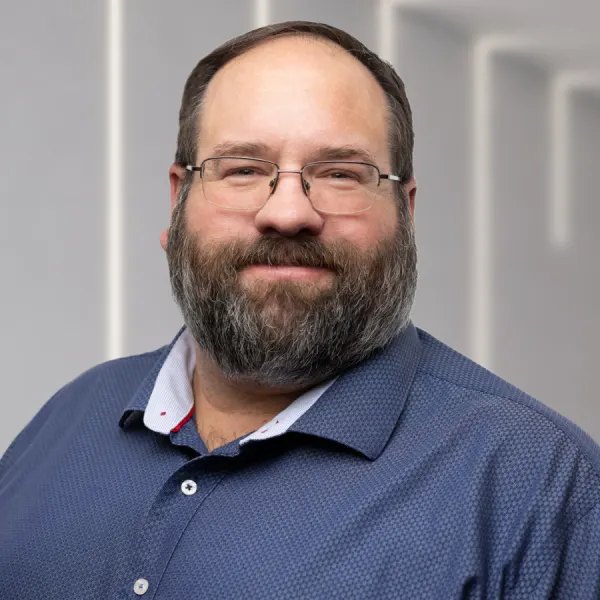


Senior Lighting Designer Dan Hadash shares what it took to help revise ANSI/IES LP-9, the industry’s guide to lighting upgrades, and why more designers should volunteer.
I love lamp!
I’ve been saying this for years, and most people laugh when I do. But what if it wasn’t just a quippy Anchorman reference? What if we actually meant it? Older light sources such as incandescent, fluorescent, and high-intensity discharge (HID) lamps have been around, in some cases, for over 100 years. Some, like incandescent, produce a beautiful warm light and dim easily. Others, like fluorescent, drastically changed the architecture of commercial buildings. And then there’s ceramic metal halide, whose precision for exterior lighting makes it a really amazing source. One thing they all have in common is that they aren’t very efficient from a power standpoint. A long-standing industry joke about incandescent is that it’s a heater that happens to produce some light. Many of these sources also need mercury to function.
For these reasons, ANSI (the American National Standards Institute) and the IES (the Illuminating Engineering Society) published ANSI/IES LP-9-20, Upgrading Lighting Systems in Commercial and Institutional Spaces, in 2020. The document took a holistic look at how to retrofit lighting in these buildings and helped simplify the options available to owners and designers when it was time to update their lighting.
In early 2023, I attended an IES presentation by a well-known CEO in the Canadian lighting industry. At the end of the talk, she encouraged those of us in the audience to join IES technical committees to help shape the future of lighting. Afterwards, I looked through the committees with openings, found that the Lighting Upgrades Committee was actively looking for volunteers, and applied. I was accepted shortly after.
We started updating the document later in 2023 and met frequently throughout the rest of the year, pairing off to take on various subsections. I volunteered to update the retail and healthcare portions of the specific applications section, with healthcare being a big part of the work we do at SMP. The other designer working on this section and I met several times over the rest of that year and into 2024.
By the summer of 2024, the complete document had been updated, and each of us on the committee reviewed the whole document to make sure everything was correct. There was a lot of back and forth on edits and changes during this time. In October of that year, the committee voted to send the document forward to the IES for technical review.
In December 2025, we were informed that the document had received final approval from the IES and ANSI and was being prepared for typesetting and publication. The document was added to the IES document library shortly thereafter.
Being part of the update has also sharpened the way I approach lighting upgrades at SMP. Many of our projects involve existing buildings, and LP-9 lays out the basic paths for improving an older lighting system: retrofit, redesign, or a combination of both. I’ve worked on both kinds of projects. At Rockyview General Hospital in Calgary and the Centennial Centre in Ponoka, we upgraded the exterior site lighting from older HPS and Metal Halide sources to LED to lower maintenance and energy costs while vastly improving lighting quality and safety for users.
At Calgary International Airport, we replaced the lighting on multiple levels of the P1 parkade with LED luminaires and redesigned the Domestic Terminal Arrivals Level lighting, both projects improved Pedestrian comfort and safety through increased visibility while also reducing maintenance costs long term. Knowing the thinking behind those guidelines helps us give owners clear, practical options when it’s time to move away from legacy light sources.
It was an honour to work on this committee, and I was surprised at how much work went into updating just one of the dozens of documents maintained by IES and ANSI committees, which are made up almost exclusively of volunteers. As President of the IES Calgary Section and someone who works in the lighting design world every day, I highly recommend that more people join committees like these to make sure these important documents don’t fall behind. If nothing else, you might be asked to write a blog post about your experience doing the work.

Practice-based insights from across our team








Calgary, AB T2N 3P7
Edmonton, AB T5N 3K3
Lethbridge, AB T1J 4M1
Vancouver, BC V5Z 4C2


